The manuscript sounds convincing. Does the argumentation hold up?
Evaluating non-fiction manuscripts means: understanding the subject matter, following the argumentation, assessing the structure. narratiQ does this in minutes – even if you're not an expert in quantum physics, tax law, or cardiac surgery.
Or view an example analysis directlyFrom Schnell · Initial assessment
Accept, revise, or reject
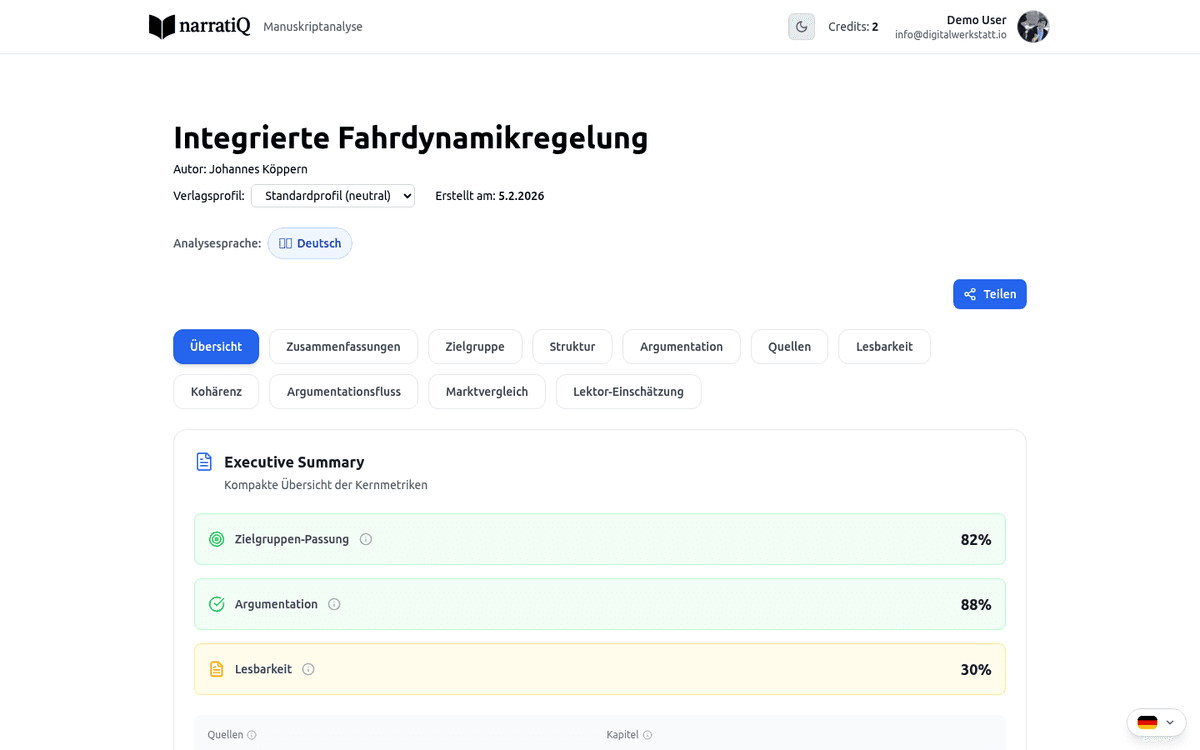
Evaluating non-fiction manuscripts takes even experienced editors hours to days. Understanding the subject, following the argumentation, checking sources. And then formulating a well-founded recommendation. narratiQ delivers the complete overview on one page: elevator pitch, core thesis, key insights, target readers, unique selling proposition, genre classification, strengths and weaknesses, and tonality – all at a glance. From "pile of unread" to "informed decision" in minutes instead of 2 days.
- 8-field overview: Elevator pitch, core thesis, key insights, target readers, USP, genre, strengths/weaknesses, tone/style
- Clear recommendation as decision support for the editorial board meeting
- Exportable as PDF for editorial board meetings
- Editorial recommendations and risk assessment
From Full · Detailed analysis
Arguments put to the test
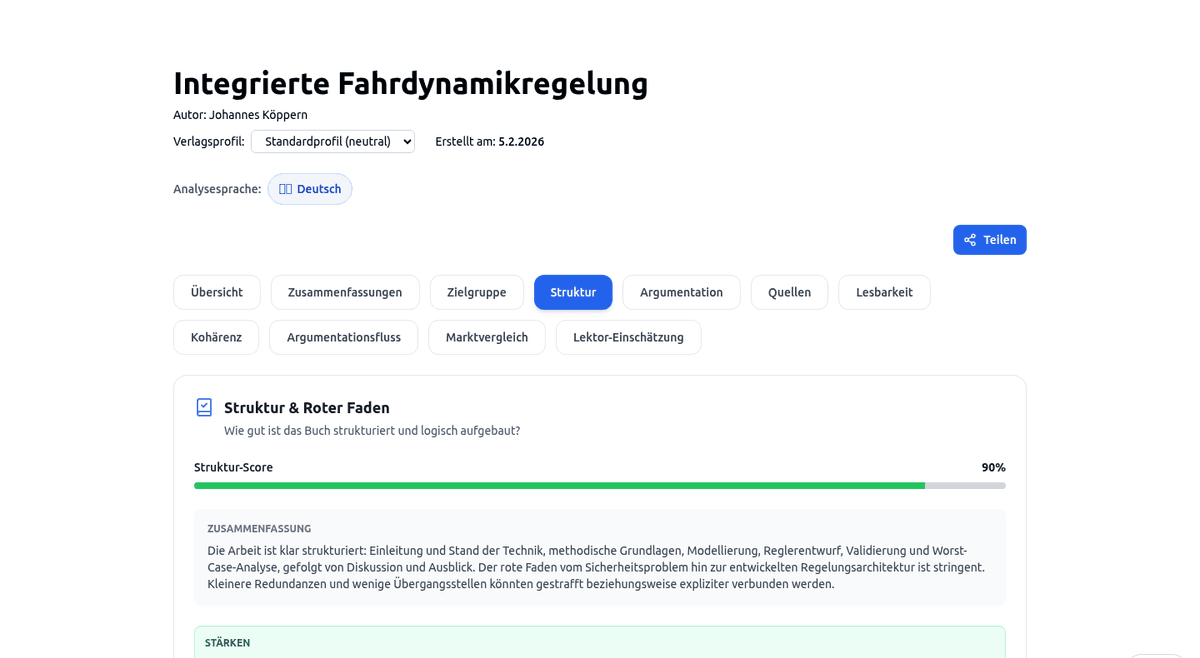
A non-fiction manuscript reads convincingly – but does the argumentation withstand critical scrutiny? Circular reasoning, unsubstantiated claims, and logical leaps rarely stand out on the first read. narratiQ lays bare the entire argumentation structure. Every thesis is identified, supporting evidence checked, logical consistency evaluated. Internal contradictions between chapters are detected, the handling of counterarguments analyzed. The result: An argumentation score and a list of every weakness found – before the reader finds them.
- Thesis identification and evidence evaluation for every core argument
- Detection of logical fallacies: circular reasoning, false dichotomies, logical leaps
- Internal contradictions between chapters made visible
- Argumentation score (0–100) as a reliable metric
From Full · Detailed analysis
Does the book deliver on the title's promise?
The most common reason for poor Amazon reviews of non-fiction books: "Doesn't deliver on what the title promises." This damages not just the individual title, but the publisher's brand. narratiQ automatically cross-references what the title, blurb, and introduction promise – and what the manuscript actually delivers. Gaps become visible: topics that are announced but not covered. As well as extras: content the book delivers but never announces. Result: A fulfillment score and a clear overview – before the book goes into production.
- Automatic cross-reference: Title and introduction vs. actual content
- Fulfillment score (0–100): How completely is the promise delivered?
- Gaps: Promised but not delivered – clearly listed
- Extras: Delivered but not announced – potential for better marketing
From Schnell · Initial assessment
Confidently evaluate manuscripts outside your expertise
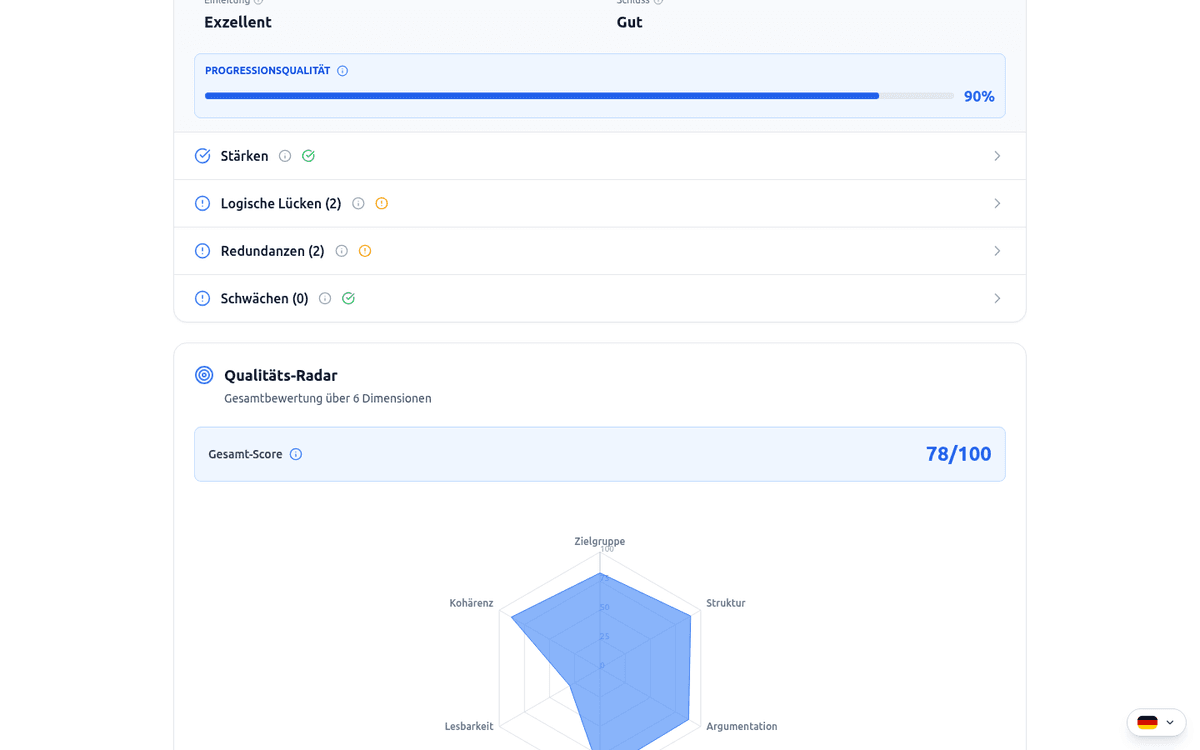
A manuscript on quantum physics lands on your desk – and you studied literature? Without help, the result is either hours of familiarizing yourself with the subject or an uncertain assessment that won't hold up in the editorial meeting. narratiQ creates an accessible introduction to the subject: What are the key concepts? Which technical terms do you need to know? Why is the topic relevant? Plus an assessment of whether the argumentation and evidence hold up – regardless of whether it's about medicine, history, or economics. After reading the analysis, you can explain the subject in your own words – and make an informed judgment on whether the manuscript communicates its topic effectively.
- Accessible explanation of the subject area with key terms
- Explanation quality: Are technical terms well explained in the manuscript?
- Target audience fit: Does the language complexity match the intended readership?
- Argumentation quality and evidence assessment: Does the specialist argumentation hold up?
narratiQ does not replace expert review. For legal or medical content, we recommend additional specialist expertise.
More features
Everything for an efficient workflow
Argumentation logic
Chapter coherence, argumentation flow, and structure overview – instantly identify the manuscript's thread of argument.
Executive summary
One page, all insights. The perfect decision basis for editorial board meetings and quick initial conversations with authors. Exportable as PDF.
19 languages
German, English, French, Spanish, Italian, and 14 more languages. Analyze international manuscripts without translation.
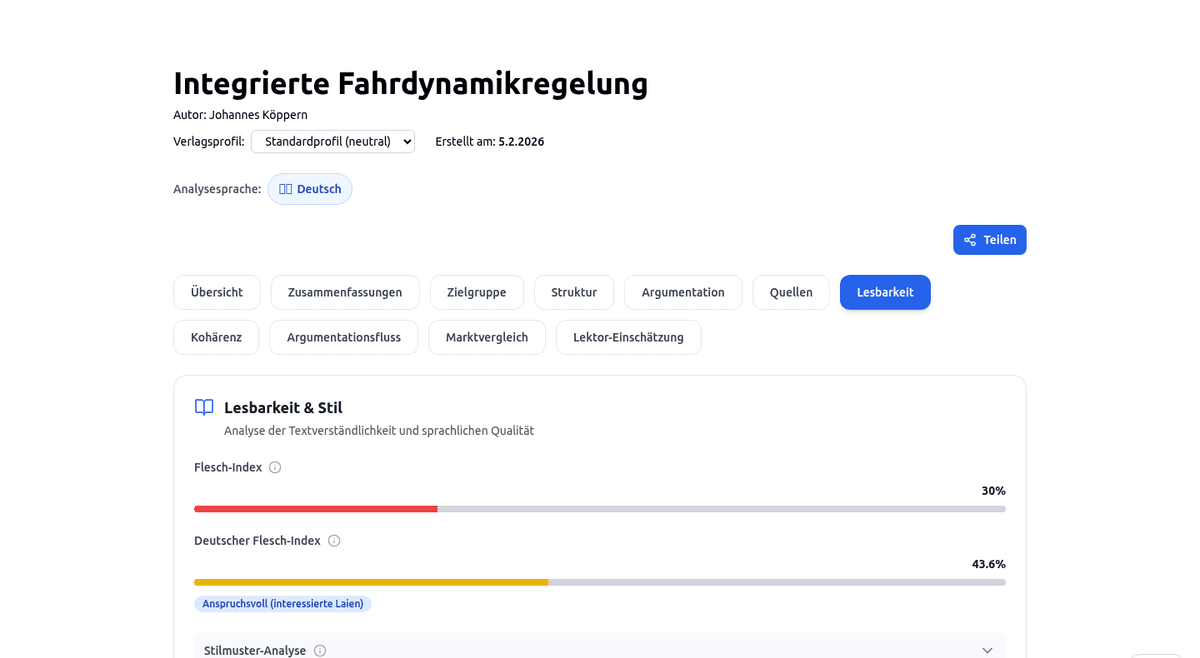
Readability analysis
Flesch index, sentence length, passive voice ratio, and technical term density. Objective measurement of whether the style suits the target audience.
See it in action
Scroll through a real non-fiction analysis and discover how narratiQ breaks down structure, argumentation, and technical terms.
View example analysisDo you also work with fiction manuscripts?
Discover fiction analysisReady to evaluate non-fiction with confidence?
In a personal demo, we'll show you how narratiQ breaks down complex subject matter.